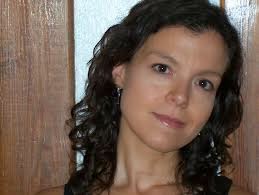
Carl Marcum wins Letras Latinas/Red Hen Poetry Prize
Letras Latinas, the literary initiative at the University of
Notre Dame’s Institute for Latino Studies, and Red Hen Press, the Los Angeles
area literary press, are pleased to announce Carl Marcum as the winner of the Letras
Latinas/Red Hen Poetry Prize—an initiative which supports the publication of a
second or third book by a Latinx poet residing in the United States. His
full-length manuscript was selected by noted poet, memoirist, editor and
publisher Carmen Giménez Smith.
"Reading A Camera
Obscura is like having your head in the clouds, like understanding the
source of stars, a book ‘so vast it stays captured’ in your imagination. And
this is precisely what Carl Marcum pulls off in this stunning work,"
Giménez Smith shared.
Carl Marcum was born in Nogales, Arizona to a Mexican mother
and Anglo Father. He received his MFA from the University of Arizona and
published his first collection, Cue Lazarus, with the University of
Arizona Press as part of their Camino del Sol series. He has been a Wallace
Stegner Fellow at Stanford University, and a recipient of grants from the
National Endowment for the Arts, the Illinois Arts Council, and the Ragdale
Foundation. His poems have been featured in the anthologies The Wind
Shifts: New Latino Poetry, Camino del Sol: Fifteen Years of Latina and
Latino Writing and Latino/a Rising: An Anthology of Latin@ Science
Fiction and Fantasy. He taught Creative Writing for many years at DePaul
University in Chicago and now lives in Pittsburgh where he manages an
Engineering and Environmental Consulting Firm in the Marcellus Shale.
“I am very pleased to have A Camera Obscura selected.
I am doubly thrilled that my work was selected by Carmen Giménez Smith, a poet I admire and respect.
There are so few awards for second and third books, and I am very happy that
this initiative seeks to award Latinx poets who have already published a debut
collection. In my experience, the second collection is more difficult to write,
and more rewarding to complete. Estoy muy honrado de ser seleccionado para este
premio. Mil gracias,” Marcum said, shortly after receiving the news that his
manuscript had been designated the winner.
The Letras Latinas/Red Hen Poetry Prize, which is deliberate
in how it paces the publication of its winners, has two books in the pipeline
now. Joe Jiménez’s manuscript, Allegory,
Rattlesnake, was selected by Rigoberto González in 2016 is slated for publication
next year (2019). Carl Marcum’s collection is slotted for 2021. The next submission
deadline is January 15, 2020. The final judge is yet to be designated.
The Letras Latinas/Red Hen series to date is as follows:
Speaking Wiri Wiri(2013)
by
Dan Vera
—selected by Orlando Ricardo Menes
The Gravedigger’s Archaeology(2015)
by
William Archila
—selected by Orlando Ricardo Menes*
Beasts Behave in Foreign Land(2017)
by
Ruth Irupé Sanabria
—selected by Lorna Dee Cervantes
RattlesnakeAllegory (2019)—forthcoming
by
Joe Jiménez
—selected by Rigoberto González
A Camera Obscura (2021)—forthcoming
by
Carl Marcum
—selected by Carmen Giménez Smith
Letras Latinas, the literary initiative at the Institute for
Latino Studies (ILS), strives to enhance the visibility, appreciation and study
of Latinx literature both on and off the campus of the University of Notre Dame—with
an emphasis on programs that support newer voices, foster a sense of community
among writers, and place Latinx writers in community spaces. Letras Latinas is
a founding member of the Poetry Coalition, a group of organizations working
together to promote the value poets bring to our culture and the important
contribution poetry makes in the lives of people of all ages and backgrounds.
Red Hen Press, based in Pasadena, CA, is committed to
publishing works of literary excellence, supporting diversity, and promoting
literacy in local schools. They seek a community of readers and writers who are
actively engaged in the essential human practice known as literature.
*in order to establish the desired pace of publication, the
inaugural judge was asked to select two manuscripts from the first pool of
entries
“Because We Come from
Everything: Poetry & Migration” is the first
public offering of the newly formed Poetry Coalition—twenty-two organizations
dedicated to working together to promote the value poets bring to our culture
and communities, as well as the important contributions poetry makes in the
lives of people of all ages and backgrounds.
During
the month of March, coalition members CantoMundo and Letras Latinas are
partnering to present guest posts by CM fellows at Letras Latinas Blog that will include essays, creative non-fiction,
micro reviews and dialogues between writers. This year’s theme borrows a line
from U.S. Poet Laureate Juan Felipe Herrera’s poem, “Borderbus.” Please return
to this space and enjoy all the pieces in the series, and leave comments to
participate in the dialogue.
Barbara
Curiel, CantoMundo
Francisco
Aragón, Letras Latinas
POETRY
CONTAINS MULTITUDES:
A
conversation between Suzi F. Garcia and Carmen Gimenez Smith.
CGS: I’ve been
thinking a lot about the wall and the recent political discourse connected
specifically to Latinidad and the idea that we encroach and probably the great
irony when we consider how recently much of the Southwest belonged to Mexico,
which before it was a Spanish colony, belonged to indigenous populations.
SFG: The idea that we
are crowding out others; space, jobs, benefits such as Healthcare, etc?
CGS: Yes, and I
wonder what sort of figurative system it leaves for us after January 20,
especially as there are Latinx all around who will be wrestling with belonging
and the (sometimes forced) redefining of their migrations.
SFG: I think the wall
makes visible our insecurities and fears in many ways. We have a wall that is
built specifically for one nationality that makes up our community, but we all
recognize though, for example, you and I have a greater distance when we think
of migration: that wall means us too. It is a shutting down of our community,
not a specific part of our community. Yet it will still instill division and
further insecurity in our community. If that makes sense?
CGS: Absolutely. I’ve
been thinking a lot about what I would call the folkloric imaginary of media
and how it engages with shared anxieties, and then I came upon this movie:
I realize a couple of
things: that the stories of how the US West is populated by the lower Americas
is a potent narrative in the American imaginary and that it’s also one that’s
loaded with political symbolism.El Norte was such a defining film for my
Latinx identity when I first saw it because it gave voice to what felt
subtextual to my parent’s existence, not necessarily in how they came over, but
in how the common goal is the source of such intense striving to belong in a
country that still cannot fully integrate the presence of Latinx, despite the
history.
SFG: That film looks
horrifying. I feel ill watching that trailer, and I can’t imagine watching that
in fullscreen in a theatre in the Midwest. I saw El Norte in a classroom in
Arkansas, and I felt so disconnected from it, interestingly. Because I was so
disconnected from my community, because it was not my father’s experience,
which is so different in many ways than immigrating today, but most because of
a lack of communications. I was discussing INS almost misses with a friend the
other day, and I mentioned my father was once mistakenly arrested while
undocumented and how my family has always laughed about it. It was the wrong
person, he had the same name as someone with a warrant out. But they didn’t
realize my father was undocumented so once they figured out he was the wrong
guy, they just let him go. And if they hadn’t, I very likely would not have
been born. But we laugh about these moments in my family instead of
communicating about some of the fears I have about his still incredibly heavy
accent, etc. It was easy for me to disconnect when I was younger because I did
not have the same kind of community that forces me to engage.
CGS: How do you
integrate that into your work and who are Latinx poets or poems you turn to for
perspective?
SFG: I think it’s
hard, because I think it’s not the way I think organically. I think generally,
it took a long time to also see myself as a raced person, because I was in a
community in the South heavily divided into a black and white binary (if you
know anything about the Central High Integration, that’s my school district,
where my older brother went to high school, my partner, etc). I try to be more
conscious and think about what I would want to communicate, even if I don’t
always do so with my family. I’m a very confessional poet, lol. Oddly, I look
to two very different kinds of poets, but both incredibly expressionist. I’m
very interested in slam and performance poets, such as Elizabeth Acevedo and Jennifer
Tamayo, because I think they, in their different styles, are open to being
declarative and not shying from what they want to say. It’s more organic for me
to joke about a topic (which has its place), but I think neither of them are
afraid to be serious and honest about expressing themselves in whichever way
fits them best (including humor). I think you recently mentioned that you
steered away from spoken word because of ingrained racism? I think many of us
“page poets” have some roots in that, and now I crave that style of honesty and
vulnerability. There is something vulnerable in being declarative that I am
afraid of as a poet, but something I want to embrace. I’m also obsessed with
Anne Sexton’s letters, for similar reasons, though stylistically, again, very
different.
CGS: Spoken word,
like jazz, is a very American art form, with roots in many different immigrant
cultures (like the connection between capoeira and breakdancing), so it’s
narrow to not engage with it as an artist and scholar. I’m terrible at
memorizing things, so I don’t think I’ll ever perform, but I do think that
those original early lyric impulses and those that impel spoken word or exactly
the same.
SFG: Once you
recognize that you’ve been shying away from something valuable like spoken
word, how did you find yourself re-calibrating? How did you begin to think of
these ideas of lyric in your writing and bring out the spoken word connections?
CGS: Mostly I felt
drawn to the rhetorical power of anaphora that lives at the core of spoken
word, and the amazing diction play, the engagement with the material world.
Affectively, a more neuter version of that energy was available in “page poetry,”
but not much of that work engages with issues of race and gender in the direct
way found in spoken word. I also love the joker/griot energy, the dynamic
storyteller required to live inside of the work. Here is Edwin Torres's Sensei Sunset:
SFG: I want to bring
the way spoken word is so direct about race over to “page poetry” desperately.
I’m also really influenced by hip-hop and music, generally, as is spoken word.
I have no memorization skills and no
sense of natural rhythm, so I can’t ever be a spoken word artist, but I also
want to take what they do on stage and see how we can morph that on the page to
meet the challenges of the page, but also do something new.
CGS: Here’s Urayoan
Noel doing Spic Tracts:
In that video, Ura
really captures an interesting subject position: one in which the cultural
backdrop informing the work isn’t clear-cut. Despite knowing this on a
philosophical level, I think Ura’s work and Edwin Torres’s too, for that
matter, explore how un-monolithic Latinx identity really is, and that perhaps
that’s the nuance to internalized racism, believing that one particular
approach is too weighed down by narrowness (when many other poetic “schools”
also suffer the same problem).
SFG: That video is
amazing for many reasons, but yes, even when thinking about this project, I
wanted to think about Peruvian-American poets, but I couldn’t think of others.
And then Peruvian poets translated in English… But there is something hard
about being a continent away, with such a specific history that then gets
generalized/ we generalize into the “Latinx experience.” There is room within
us for all of these experiences and these expressions, but it feels as though
there is an ease to being narrow that we need to push against.
I think Monica
McClure pushes against narrowness. In this video, she contains so many
multitudes, embracing a subjectivity in what is often seen as objectified. I’m
discussing this video at a conference soon in conversation with the idea of
Camp. The language and styles of Latinidad is seen as unironically kitschy, as
though we don’t see our own bright colors and love them with an aware
sincerity. I find Monica not necessarily answering our questions about the
complexity of gender roles, multiracial identity, machismo, etc. in Latinidad
but exploring them, throwing them into light in a way I respect and am engaged
by. I show this video to students often in creative writing classes. When they
first watch the video in the beginning of the semester, they are so confused
(they feel like they know what poetry is and Monica is not a whole lot like
Poe), but by the end of the semester, they see it as an entrance into poetry, a
new way they can play with tools and see themselves.
Monica McClure
***
Suzi F. Garcia has an MFA in
Creative Writing, with minors in Gender Studies and Screen Cultures. She is a
Poetry Editor at Noemi Press, and her work has been featured in or is
forthcoming from Vinyl, the Offing,
DREGINALD, Reservoir Journal, and more.
Carmen
Gimenez Smith edited Angels of the Americlypse with John
Chavez. She is publisher of Noemi Press and teaches at New Mexico State
University. Her next poetry collection, Post-Identity,
will be published by Graywolf Press.
The University of Notre Dame’s Institute
for Latino Studies (ILS), in close collaboration with the Creative Writing
Program, is pleased to present on October 28-29 “Angels of the Americlypse: readings and colloquia—new Latin@ poetries
and literary translation,” featuring:
Rosa Alcalá
Carmen Giménez
Smith
Roberto Tejada
Rodrigo
Toscano.
Angels
of the Americlypse, the title of a recent anthology of
new Latin@ writing, provides the context of this mini-conference, whose aim is
to further the dialogue among Latin@ poets seeking to complicate and enrich discussions
in the field. “As the conversation about race
evolves, so do the shifting boundaries and markers of Latinidad, and in the
case of this anthology and many of the most exciting work being written by
Latin@s, aesthetics itself," said Carmen Giménez Smith, co-editor of the volume.
On the mornings of October 28 and 29, students
in Notre Dame’s MFA program will conduct video interviews with the four poets. "This gathering exists at the nexus of politics,
poetics, translation, publishing, scholarship and activism. We're excited to
welcome our accomplished guests into our vibrant community," said Joyelle McSweeney, poet, playwright,
critic and current Director of Notre Dame’s Creative Writing Program.
On the afternoons of October 28 and 29
at 2 PM in 110 McKenna Hall the poets will take part in a public panel and
roundtable discussion, respectively. The first, titled “Latino Poetry In
Relation,” will be introduced and moderated by visiting poetry scholar Michael Dowdy, an associate professor
of English at Hunter College (CUNY). The second, titled “The Politics of
Translation,” will be introduced and moderated by Johannes Göransson, poet, translator, and assistant professor of
English in Notre Dame’s Creative Writing Program.
The evening of October 28 at 7:30 PM, Alcalá, Giménez Smith, Tejada
and Toscano will give a
collaborative performance of their work in the Eck Auditorium at the Eck
Visitors Center. The event will be LIVE-STREAMED at: http://latinostudies.nd.edu/angels
for a national audience. “This is a first for Letras Latinas,” said Francisco Aragón, faculty member at the
ILS and director of its literary initiative. “We’ve reached out to the Poetry
Foundation in Chicago and the Academy of American Poets in New York, among
others, including the Poetry Center at the University of Arizona—in fact, I
just learned that they will be hosting a viewing party in Tucson. Our hope,
really, is to have the national poetry community “attend” our event via the web
to experience what Notre Dame will be offering that night,” Aragón said. There
will also be a pre-reading reception at 6:15 PM, and the campus bookstore will
be on hand to sell books.
The two-day gathering builds
upon the legacy of a Latino poetry conference that took place on the Notre Dame
campus in the Fall of 2002, organized in large part by professor of English Orlando
Menes, in which poets from the previous generation gave readings and took part
in panel discussions. In reflecting upon this newer wave of writers, Menes, who
is now the Poetry Editor of Notre Dame
Review, said, "These are poets who take estrangement seriously—not
as an attitude, not as a fad, not as an affectation—but as a heartfelt call to
speak their truth in communal fellowship."
Letras Latinas, the literary initiative
at the Institute for Latino Studies, strives to enhance the visibility,
appreciation and study of Latino literature both on and off the campus of the
University of Notre Dame. The initiative emphasizes programs that support newer
voices and foster a sense of community among writers.
The Creative Writing Program at Notre
Dame is a course of study with the flexibility for students to initiate a
variety of literary lives through exposure to a range of aesthetics, a global
literary orientation, course work in historical and contemporary literary
forms, and interaction with visiting authors and scholars.
In addition to the Creative Writing
Program, campus co-sponsors include: the Henkels Lecture Fund at the Institute
for Scholarship in the Liberal Arts; Department of American Studies; Department
of English; the Graduate School; Department of Romance Languages and
Literatures; the José E. Fernández Hispanic Studies Initiative.
*
the poets
Rosa Alcalá is the author of
two books of poetry: Undocumentaries
(2010) and The Lust of Unsentimental
Waters (2012), both from Shearsman Books, as well as two chapbooks: Undocumentary (Dos Press, 2008) and Some Maritime Disasters This Century
(Belladonna Books, 2003). Spit Temple:
The Selected Performances of Cecilia Vicuña (Ugly Duckling Presse, 2012),
which Alcalá edited and translated, was runner-up for the 2013 PEN Award for
Poetry in Translation. Alcalá has been a recipient of a National Endowment for
the Arts (NEA) fellowship for literary translation (poetry) for translating
Vicuña. She has also translated the work of Lila Zemborain, Lourdes Vázquez,
and other poets, with translations included in the Oxford Book of Latin American Poetry. She is Associate Professor in
the Department of Creative Writing and Bilingual MFA Program at the University
of Texas at El Paso.
Carmen Gímenez Smith is
the author of four books of poetry: Milk and
Filth (University of Arizona Press, 2013), Goodbye, Flicker (University of Massachusetts Press, 2012), The City She Was (Center for Literary
Publishing, 2011) and Odalisque in Pieces
(University of Arizona Press, 2009). She is also the author of: Bring Down the Little Birds (University
of Arizona Press, 2010), a memoir. Her most recent book, Milk and Faith, was a finalist for the National Book Critics Circle
Award and her memoir was the recipient of a 2011 American Book Award. She was
also the winner of the 2011 Juniper Prize for Poetry, and a 2011-2012
fellowship in creative nonfiction from the Howard Foundation. She is Associate
Professor of English at New Mexico State University’s graduate program in
creative writing, while also serving as the editor-in-chief of the literary
journal Puerto del Sol and the
publisher of Noemi Press.
Roberto Tejada is
the author of three poetry books: Mirrors
for Gold (Krupskaya, 2006), Exposition
Park (Wesleyan University Press, 2010), and Full Foreground (University of
Arizona Press, 2012). He founded and co-edited the journal: Mandorla: New Writing from the Americas.
Tejada has been a recipient of a National Endowment for the Arts (NEA)
fellowship for literary translation (poetry) for his work with Jose Lezama
Lima. He is the Hugh Roy and Lillie Cranz Cullen Distinguished Professor of
English and Creative Writing at the University of Houston. Tejada is also the
author of art histories that include: National
Camera: Photography and Mexico’s Image Environment (University of Minnesota
Press, 2009), and Celia Alvarez Muñoz
(UCLA/CSRC; University of Minnesota Press, 2009). Tejada has published critical
writings on contemporary U.S., Latino, and Latin American artists in: Afterimage, Aperture, Bomb, The Brooklyn Rail, SF Camerawork, and Third Text.
Rodrigo Toscano’s
newest book is: Deck of Deeds
(Counterpath, 2012). His previous book, Collapsible
Poetics Theater (Fence Books, 2008), was a National Poetry Series
selection. Other books of poetry include: To
Leveling Swerve (Krupskaya, 2004), Platform
(Atelos, 2003), The Disparities
(Green Integer, 2002), and Partisans
(O Books, 1999) He was the recipient of a 2005 New York State Fellowship in
Poetry. His poetry has appeared in numerous anthologies, including Against Expression, Diasporic Avant Gardes, Poetic
Voices Without Borders, and Best
American Poetry. Toscano’s Spanish language poetry appears in the anthology
Malditos Latinos, Madlitos Sudacas.
His poetry has been translated into French, Dutch, Italian, German, Portuguese,
Norwegian, and Catalan. Toscano works for the Labor Institute in conjunction
with the United Steelworkers and the National Institute for Environmental
Health Science.
the
panel & roundtable moderators:
Michael
Dowdy is Associate Professor of English at Hunter College (CUNY),
where he teaches courses in twentieth-century American poetry, Latina/o
literature, and multiethnic literatures of the United States. He has published
on modern and contemporary poetry, with a focus on Latino poetry. Broken Souths: Latina/o Poetic Responses to
Neoliberalism and Globalization, a book-length study of Latino poetry which
puts Latino and Latin American poets into conversation, was published in 2013
by the University of Arizona Press. Dowdy’s critical essays on Latino poetry
have appeared or are forthcoming in MELUS,
College Literature, Appalachian Journal, Aztlán: A Journal of Chicano Studies,
Journal of Modern Literature, and in Acknowledged
Legislator: Critical Essays on the Poetry of Martín
Espada, which was published in 2014 by Fairleigh Dickinson University
Press. He is currently working on a project on documentary poetics and editing
a volume in Wesleyan University Press’s
American Poets in the 21st Century series that includes a number
of Latino/a poets.
Johannes
Göransson is Assistant Professor of English at
the University of Notre Dame, teaching in the Creative Writing Program. He is
the author of several books, including Haute
Surveillance (Tarpaulin Sky Press, 2013), Entrance to a colonial pageant in which we all begin to intricate
(Tarpaulin Sky Press, 2011), Dear Ra (A
Story in Flinches) (Starcherone Books, 2008), Pilot (Johann the Carousel Horse) (Fairy Tale Review Press, 2008)
and A New Quarantine Will Take My Place
(Astrophe Books, 2007). As a literary translator (from the Swedish) his titles
include Aase Berg’s Dark Matter
(2012), Transfer Fat (2012) and Remainland: Selected Poems of Aase Berg
(2005), as well as Henry Parland’s Ideals
Clearance (2007). Goransson’s critical and creative work explores genre,
aesthetics, and the limits of the autonomous text. He has written on subjects
ranging from gurlesque poetry to Sylvia Plath to translation theory.